
The Chess Insights Journal

Smarter Books. Stronger Business.

Practical, plain language guidance on keeping your books clean and your payroll running smoothly. Written for small business owners, not accountants.

A polished silver and emerald chess king standing on a dark obsidian chessboard beside an open elegant emerald framed ledger book whose page shows a weekly timesheet grid with rows of clock in and clock out times, one row circled in emerald with a small emerald warning triangle icon and a small emerald clock icon to represent accurate time tracking for payroll, a small sleek laptop computer showing a clean time tracking dashboard with a small emerald stopwatch icon and a small emerald checkmark icon on its screen, a neat stack of paper timesheets and a emerald fountain pen resting on the ledger, small silver coins arranged in two rows with one coin moved back into place to show a corrected time entry, and a small emerald balance scale token, all on a deep charcoal background with soft silver and emerald light, representing why accurate time tracking matters for payroll.
Payroll
Guide

Why Accurate Time Tracking Matters for Payroll

Accurate time tracking is the quiet foundation of an accurate payroll run, and it almost always shows up as the first number that drives every number after it. One missed clock in, one rounded shift, or one unrecorded break can turn a clean payday into a wrong gross wage, a wrong overtime total, and a wrong net pay. The good news is that most time tracking errors follow the same small set of causes, which means a few steady habits handle them cleanly and keep the records straight. This guide walks through why accurate time tracking matters for payroll, from the way time feeds gross pay to the checks that catch a wrong entry before payday, with two real examples and a printable checklist so your next run lands in clean records instead of a second mistake.

October 1, 20256 min read
A polished silver and emerald chess king standing on a dark obsidian chessboard beside an open elegant emerald framed ledger book whose page shows a manual payroll worksheet with several rows of handwritten figures, one row circled in emerald with a small emerald warning triangle icon and a small emerald pencil icon to represent a manual payroll processing mistake, a small sleek laptop computer showing a clean payroll dashboard with a small emerald automation gear icon and a small emerald checkmark icon on its screen, a neat stack of paper timesheets and a emerald fountain pen resting on the ledger, small silver coins arranged in two rows with one coin moved back into place to show a corrected manual entry, and a small emerald balance scale token, all on a deep charcoal background with soft silver and emerald light, representing how to reduce manual payroll processing mistakes.
Payroll
Guide

How to Reduce Manual Payroll Processing Mistakes

A manual payroll processing mistake is one of the most stressful payroll moments a small employer faces, and it almost always shows up as a wrong amount on a paycheck or a wrong total in the register. One keyed in rate, one transposed number, or one missed entry can turn a clean payday into a follow up call and a second transaction. The good news is that most manual mistakes follow the same small set of causes, which means a few steady habits and a move toward automation handle them cleanly and keep the records straight. This guide walks through how to reduce manual payroll processing mistakes, from the way you confirm the source to the checks that catch a wrong entry before payday, with two real examples and a printable checklist so your next run lands in clean records instead of a second mistake.

September 24, 20257 min read
A emerald chess knight beside a broken emerald coin and a small bank icon on a dark chessboard, representing a failed direct deposit and the steps to resolve it.
Payroll
Guide

What to Do When a Direct Deposit Fails

A failed direct deposit is one of the most stressful payroll moments a small employer faces, and it almost always shows up as a returned payment or an employee who never received their net pay. One closed bank account, one wrong routing number, or one rejected transfer can turn a clean payday into a follow up call and a second payment. The good news is that most failed deposits follow the same small set of causes, which means a few steady habits handle them cleanly and keep the records straight. This guide walks through what to do when a direct deposit fails, from the way you confirm the return to the reissue that puts the net pay back in the right hands, with two real examples and a printable checklist so your next failed deposit lands in clean records instead of a second mistake.
September 17, 20257 min read
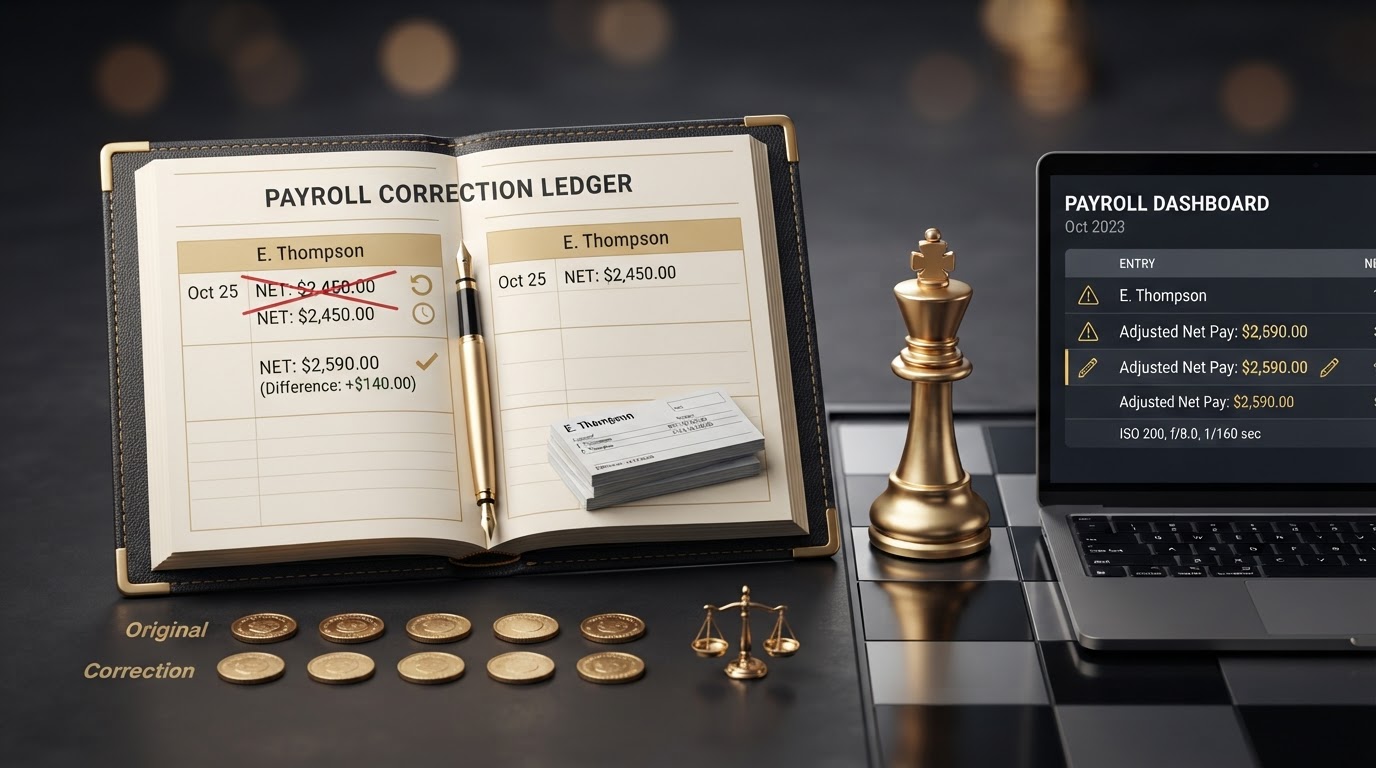
A polished silver and emerald chess king standing on a dark obsidian chessboard beside an open elegant emerald framed ledger book whose page shows two side by side payroll entries, one crossed out and one corrected, with a small emerald circular arrow icon and a small emerald clock icon to represent a payroll correction after payday, a small sleek laptop computer showing a clean payroll dashboard with a small emerald warning triangle icon and a small emerald pencil icon editing a row on its screen, a neat stack of pay stubs and a emerald fountain pen resting on the ledger, small silver coins arranged in two rows with one coin moved from one row to another to show a corrected amount, and a small emerald balance scale token, all on a deep charcoal background with soft silver and emerald light, representing how to handle payroll corrections after payday.
Payroll
Guide

How to Handle Payroll Corrections After Payday

A payroll correction after payday is one of the most stressful payroll moments a small employer faces, and it almost always shows up as a wrong amount on a pay stub that has already gone out. One overpayment, one underpayment, or one wrong deduction can turn a clean run into a follow up call and a second transaction. The good news is that most corrections follow the same small set of causes, which means a few steady habits handle them cleanly and keep the records straight. This guide walks through how to handle payroll corrections after payday, from the way you confirm the error to the rerun that fixes the affected line, with two real examples and a printable checklist so your next correction lands in clean records instead of a second mistake.

September 10, 20257 min read
A polished silver and emerald chess king standing on a dark obsidian chessboard beside an open elegant emerald framed ledger book whose page shows two side by side columns of figures, one column labeled payroll and one labeled books, with one row in each column circled in emerald and a small emerald equals sign with a slash through it between them to show the two records do not match, a small sleek laptop computer showing a clean reconciliation dashboard with a small emerald warning triangle icon and a small emerald magnifying glass icon on its screen, a neat stack of payroll registers and accounting ledgers side by side with a emerald fountain pen resting on them, small silver coins arranged in two rows with one coin out of place to show a mismatch, and a small emerald balance scale token, all on a deep charcoal background with soft silver and emerald light, representing why payroll and accounting records do not match.
Payroll
Guide

Why Payroll and Accounting Records Don't Match

When payroll and accounting records do not match, a small employer is left staring at two sets of numbers that should agree and do not. One journal entry posted to the wrong account, a payroll liability left unreconciled, or a net pay total that never reached the books can turn a clean month end into hours of hunting. The good news is that most mismatches follow the same small set of causes, which means a few steady habits catch them before the close. This guide walks through why payroll and accounting records do not match, from the way payroll entries land in the books to the reconciliation that ties the two together, with two real examples and a printable checklist so your next close starts from numbers that agree.

September 3, 20257 min read
A polished silver and emerald chess king standing on a dark obsidian chessboard beside an open elegant emerald framed ledger book whose page shows neat rows of employee payroll entries with one row left blank and marked by a small emerald question mark icon and a small emerald magnifying glass icon to represent missing employee payroll information, a small sleek laptop computer showing a clean payroll dashboard with a small emerald warning triangle icon and a small emerald document icon with a blank field on its screen, a neat stack of employee information forms with one form missing and a emerald fountain pen resting on the ledger, small silver coins arranged in a grid with one empty cell to show a missing payroll detail, and a small emerald clipboard token, all on a deep charcoal background with soft silver and emerald light, representing how to handle missing employee payroll information.
Payroll
Guide

How to Handle Missing Employee Payroll Information

Missing employee payroll information is one of the most common payroll mistakes a small employer faces, and it almost always shows up as a held pay run or a wrong deposit on payday. One missing direct deposit form, a blank address, or a new hire added without a withholding form can turn a clean run into a delay. The good news is that most missing information follows the same small set of causes, which means a few steady habits catch the gaps before payroll starts. This guide walks through how to handle missing employee payroll information, from the way you collect details at onboarding to the prepay review that catches the ones that slip through, with two real examples and a printable checklist so your next run starts from a complete employee file.

August 27, 20257 min read
A polished silver and emerald chess king standing on a dark obsidian chessboard beside an open elegant emerald framed ledger book whose page shows neat rows of payroll tax calculations with one row marked by a small emerald warning triangle icon and a small emerald calculator icon to represent a payroll tax calculation error, a small sleek laptop computer showing a clean payroll dashboard with a small emerald calculator icon and a small emerald percent symbol icon on its screen, a neat stack of payroll tax forms and a emerald fountain pen resting on the ledger, small silver coins arranged in a grid with one coin in the wrong cell to show a wrong tax amount, and a small emerald magnifying glass token, all on a deep charcoal background with soft silver and emerald light, representing what causes payroll tax calculation errors.
Payroll
Guide

What Causes Payroll Tax Calculation Errors?

A payroll tax calculation error is one of the most common payroll mistakes a small employer faces, and it almost always shows up as a wrong tax amount on a pay stub. One wrong tax rate, a wage base entered one digit off, or an exemption applied the wrong way can turn a clean run into a correction. The good news is that most tax calculation errors follow the same small set of causes, which means a few steady habits catch them before payday. This guide walks through what causes payroll tax calculation errors, from the setup that stops mistakes at the source to the prepay review that catches the ones that slip through, with two real examples and a printable checklist so your next run starts from the right tax amounts.

August 20, 20258 min read
A polished silver and emerald chess queen piece on a dark obsidian chessboard being examined with a brass magnifying glass, beside a black leather notebook with a emerald checkmarked checklist and a emerald question mark token, representing questions to ask before hiring a bookkeeping service for Chess Bookkeeping & Payroll.
Bookkeeping
Guide

Questions to Ask Before Hiring a Bookkeeping Service

Hiring a bookkeeping service is a decision worth getting right. This guide covers the key questions to ask about scope, deliverables, communication, security, and fit before you commit.

July 11, 20268 min read
A polished silver and emerald chess king standing on a dark obsidian chessboard beside an open elegant emerald framed ledger book whose page shows neat rows of weekly timesheet entries with one row marked by a small emerald clock icon and a small emerald warning triangle icon to represent a timesheet error caught before payroll, a small sleek laptop computer showing a clean payroll dashboard with a small emerald clock icon and a small emerald checkmark icon on its screen, a neat stack of weekly timesheet cards and a emerald fountain pen resting on the ledger, small silver coins arranged in a grid with one coin in the wrong cell to show a wrong hours total, and a small emerald magnifying glass token, all on a deep charcoal background with soft silver and emerald light, representing how to prevent timesheet errors before payroll.
Payroll
Guide

How to Prevent Timesheet Errors Before Payroll

A timesheet error is one of the most common payroll mistakes a small employer faces, and it almost always shows up as a wrong hours total on payday. One missed clock out, a break rounded the wrong way, or hours copied from the prior pay period can turn a clean run into a correction. The good news is that most timesheet errors follow the same small set of causes, which means a few steady habits catch them before payroll starts. This guide walks through how to prevent timesheet errors before payroll, from the way you collect hours to the prepay review that catches the ones that slip through, with two real examples and a printable checklist so your next run starts from the right hours.

August 13, 20257 min read
A polished silver and emerald chess king standing on a dark obsidian chessboard beside an open elegant emerald framed ledger book whose page shows two columns of employee rows, one column labeled with a small emerald employee badge icon and the other labeled with a small emerald contractor invoice icon, with one row marked by a small emerald coin being moved between the two columns to represent a worker being classified as the wrong type, a small sleek laptop computer showing a clean payroll dashboard with a small emerald split person icon and a small emerald balance scale icon on its screen, a neat stack of timesheet cards and a contractor invoice and a emerald fountain pen resting on the ledger, small silver coins arranged in two separate piles to show wages paid differently from contractor payments, and a small emerald magnifying glass token, all on a deep charcoal background with soft silver and emerald light, representing employee versus independent contractor payroll classification basics.
Payroll
Guide

Employee vs. Independent Contractor: Payroll Classification Basics

Whether a worker is an employee or an independent contractor changes how you pay them, what you withhold, and what records you keep. Get it wrong and the same worker can end up paid through payroll when they should have been paid on an invoice, or invoiced when they should have been on payroll, which turns a clean month into a correction. The good news is that the basics come down to a few steady questions about control, relationship, and how the work gets done. This guide walks through employee versus independent contractor payroll classification basics, from the questions that settle worker status to the records that keep each type clean, with two real examples and a printable checklist so your next worker starts in the right column.

August 6, 20258 min read

Page 8 of 20 · 200 articles

Have a question about your books or payroll?

We do two things, and we do them exceptionally well. Reach out and let's talk about how clean books and reliable payroll can give your business clarity.