
How to Handle Payroll Corrections After Payday
A payroll correction after payday is one of the most stressful payroll moments a small employer faces, and it almost always shows up as a wrong amount on a pay stub that has already gone out. One overpayment, one underpayment, or one wrong deduction can turn a clean run into a follow up call and a second transaction. The good news is that most corrections follow the same small set of causes, which means a few steady habits handle them cleanly and keep the records straight. This guide walks through how to handle payroll corrections after payday, from the way you confirm the error to the rerun that fixes the affected line, with two real examples and a printable checklist so your next correction lands in clean records instead of a second mistake.
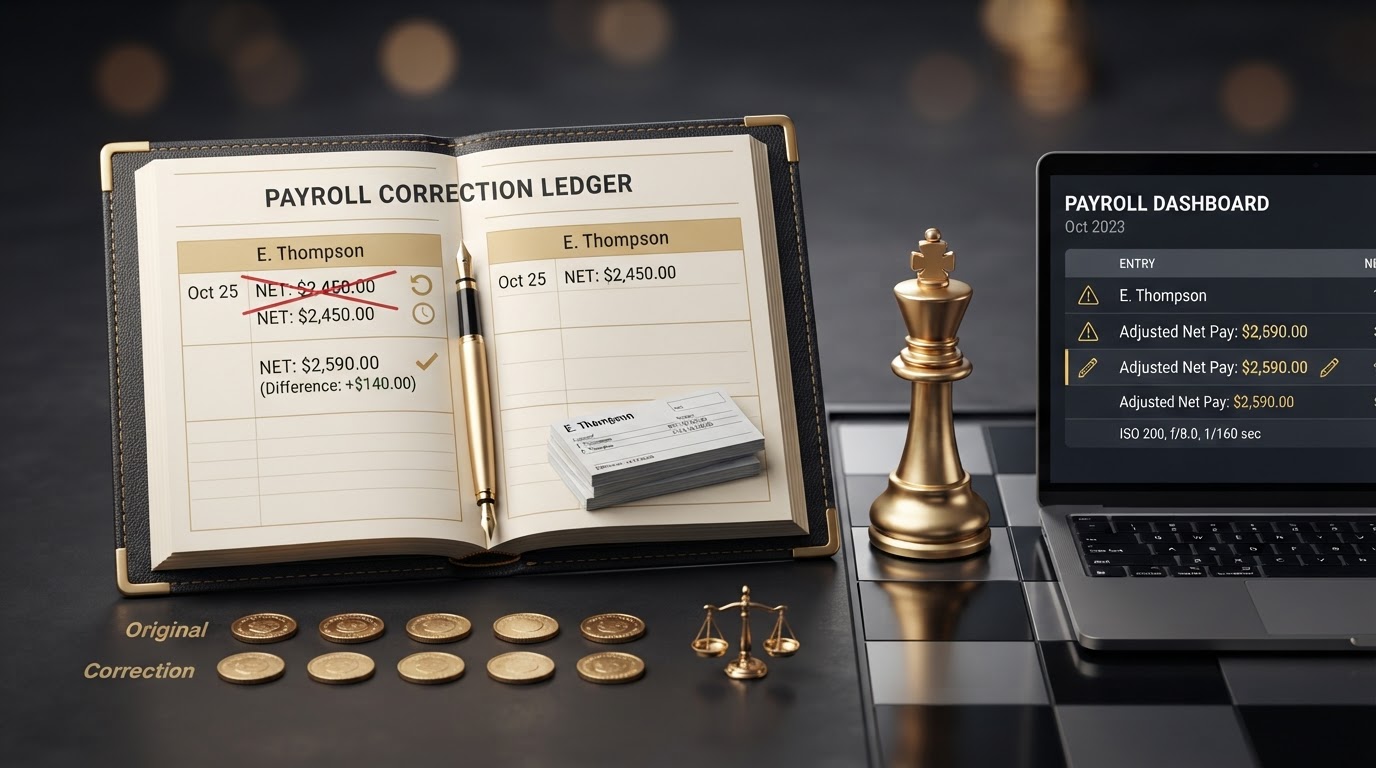
A payroll correction after payday is one of the most stressful payroll moments a small employer faces, and it almost always shows up as a wrong amount on a pay stub that has already gone out. One overpayment, one underpayment, or one wrong deduction can turn a clean run into a follow up call and a second transaction. The good news is that most corrections follow the same small set of causes, which means a few steady habits handle them cleanly and keep the records straight.
This guide walks through how to handle payroll corrections after payday, from the way you confirm the error to the rerun that fixes the affected line. If you are newer to payroll corrections, it helps to start with our guide on what to do when payroll is processed incorrectly before you dig into the after payday steps. For a closer look at the two most common corrections, see our guides on how to correct an employee overpayment and how to fix an employee underpayment.
What It Means to Correct Payroll After Payday
A payroll correction after payday is any fix you make to a paycheck that has already gone out. The original entry has already hit the payroll register and the bank, which is why the correction is handled as a second transaction instead of an edit to the first one. The correction keeps the original entry intact, records the fix, and lets the two sets of numbers tell the full story of what happened.
The correction can run in either direction. An overpayment means the employee received more than they should have, which is fixed by recovering the extra or reducing the next check. An underpayment means they received less than they should have, which is fixed by a supplemental payment for the difference. Either way, the fix is the same, which is confirming the error, rerunning the affected line, and recording the correction so the records stay accurate and easy to trace.
Common Causes of a Payroll Correction After Payday
Most corrections come from a small set of causes. Knowing them helps you find the error fast and fix the right thing instead of the symptom.
- A pay rate entered wrong. An hourly rate or a salary amount is keyed in one digit off, so the run pays the wrong amount and the correction reruns the line with the right rate.
- Hours reported late or wrong. An employee turns in hours after the run closes, or a time clock total is off, so the run pays from the wrong hours and the correction adds the missing hours.
- A deduction set up the wrong way. A garnishment, a benefit, or a tax withholding is mapped to the wrong amount or the wrong account, so the run deducts the wrong total and the correction reruns the line.
- A manual check cut outside the run. A bonus or a correction check is cut outside the payroll run and never journaled, so the books miss the entry and the correction ties it back to the records.
- A new hire or change entered after the run. A pay rate change or a new hire lands after the run closes, so the run uses the old detail and the correction reruns the line with the current detail.
Each of these causes shares one root, which is a gap between the run and the source. For a fuller look at the records side of a correction, see our guide on payroll records employers should keep.
How a Correction Lands in the Records
A correction is a second transaction, not an edit to the first one. The original entry stays in the payroll register so the run stays traceable, and the correction is recorded beside it with the right amount. Gross wages, taxes, deductions, and net pay each get the corrected entry, and the two rows together show what was paid and what should have been paid.
The correction also lands in the books. A supplemental payment hits the cash account when it clears the bank. A recovered overpayment hits the cash account when the employee pays it back. When each correction is journaled the same day it happens, the payroll register and the books stay tied together, and the month end close starts from numbers that already agree.
How to Handle the Correction
Even with clean runs, a correction can still slip through, which is why the steps matter. Confirm the error against the source first, which is the time record, the pay rate, or the deduction setup. Rerun only the affected line with the right amount, and record the correction as a second transaction so the original entry stays intact.
Tell the employee what changed and why, and keep the original entry, the correction, the source document, and a short note about the cause with the payroll records. A correction handled this way keeps the run traceable, keeps the books tied to the register, and stops the same wrong detail from reaching the next payday.
Example: A Cafe Catches an Overpayment After Payday
Consider a small cafe with hourly employees paid biweekly. The day after payday, a server notices their check is higher than the hours they worked. The owner pulls the time record and finds one shift was entered twice, so the run paid for eight extra hours.
The owner confirms the error against the time record, reruns the affected line with the right hours, and records the correction as a recovered overpayment. The owner talks with the server about recovering the difference on the next check, keeps the original entry, the correction, the time record, and a short note about the doubled shift with the payroll records, and journals the correction the same day. The example shows how an overpayment turns into a clean correction when you confirm the source and record the second transaction.
Example: A Shop Catches an Underpayment After Payday
Take a small retail shop with a mix of hourly and salaried staff paid semimonthly. The day after payday, an employee who received a pay raise the prior week notices their check still shows the old rate. The owner checks the employee file and finds the rate change was entered after the run closed, so the run used the old rate.
The owner confirms the current rate, reruns the affected line with the right rate, and records a supplemental payment for the difference. The owner tells the employee about the correction and the supplemental payment, keeps the original entry, the correction, the rate change record, and a short note about the late entry with the payroll records, and journals the correction the same day. The example shows how an underpayment is caught after payday and corrected with a clean second transaction.
How to Prevent the Next Correction
A correction is cleaner when the next run does not repeat the same error. The habits below keep the run and the source from drifting apart.
- Confirm the pay rate, the hours, and the deductions against the source before the run closes, not after payday.
- Enter rate changes and new hires before the run closes so the run uses the current detail.
- Rerun only the affected line so the original entry stays intact and the correction is easy to trace.
- Journal every correction the same day it happens so the payroll register and the books stay tied together.
- Reconcile the payroll register to the bank after every run, and review each correction with the team so the cause does not reach the next payday.
Payroll Corrections After Payday Checklist
Use this checklist after each correction so the fix lands in clean records and the same error does not reach the next run. Work through it in order so the correction stays traceable and the books stay tied to the register.
Printable payroll corrections after payday checklist
- 1Confirm the error against the source, which is the time record, the pay rate, or the deduction setup.
- 2Decide whether the correction is an overpayment or an underpayment before you rerun the line.
- 3Rerun only the affected line with the right amount, and leave the original entry intact.
- 4Record the correction as a second transaction so the run stays traceable.
- 5Enter the corrected gross wages, taxes, deductions, and net pay for the affected line.
- 6Process a supplemental payment for an underpayment, or arrange recovery for an overpayment.
- 7Journal the correction in the books the same day it happens.
- 8Tie the supplemental payment or the recovered amount to the cash account.
- 9Tell the employee what changed, why it changed, and how the correction was handled.
- 10Keep the original entry, the correction, the source document, and a short note about the cause.
- 11Reconcile the payroll register to the bank after the correction clears.
- 12Review the cause with the team so the same wrong rate, late hours, or wrong deduction does not repeat.
- 13Confirm the next run uses the current pay rate, hours, and deduction setup before it closes.
- 14Save the full correction record to your payroll files for the period.
Getting Started
A payroll correction after payday is manageable, and the management is cleaner when you confirm the error, rerun the affected line, and record the correction the same day. Work through the steps above, and your next correction lands in clean records instead of a second mistake.
Want help handling payroll corrections the right way? Explore our payroll services to see how we confirm errors, rerun the affected line, and record corrections so the payroll register and the books stay accurate. We handle bookkeeping and payroll. We do not prepare income tax returns, offer tax planning, or perform audits, but we keep your payroll accurate and your records organized so your tax preparer can do their part efficiently.
Frequently Asked Questions
What is a payroll correction after payday?
A payroll correction after payday is any fix you make to a paycheck that has already gone out. It includes an overpayment, an underpayment, a wrong deduction, or a wrong tax amount. The fix is to confirm the error, rerun the affected line, and record the correction so the payroll register and the books stay accurate and easy to trace.
Why do payroll corrections happen after payday?
Most corrections come from a small set of causes. A pay rate is entered wrong, hours are reported late, a deduction is set up the wrong way, or a manual check is cut outside the run. Each cause points to the same fix, which is confirming the error, rerunning the affected line, and keeping the correction with the payroll records so the next run starts from the right details.
How do I fix a wrong paycheck after payday?
Confirm the error with the source, which is the time record, the pay rate, or the deduction setup. Rerun the affected line with the right amount, and record the correction as a second transaction so the original entry stays intact. Tell the employee what changed and why, and keep the original entry, the correction, and a short note with the payroll records.
Does handling a payroll correction mean I am preparing income tax returns?
No. Handling a payroll correction is part of running payroll, which is the work of figuring out wages, withholdings, and net pay and keeping the payroll records organized. Income tax return preparation is a separate service. Chess Bookkeeping & Payroll does not prepare income tax returns, offer tax planning, or perform audits, but we keep your payroll and bookkeeping records accurate and organized so your tax preparer can do their part efficiently.
Should I keep records of a payroll correction?
Yes. Keep the original entry, the correction, the source document, and a short note about what caused the error and how you fixed it. The records show what happened, what you changed, and when, which matters if a question comes up later. For more on what to keep, see our guide on payroll records employers should keep.
How do I keep corrections from repeating?
Confirm the details before the run, watch for the causes that show up most often, and rerun only the affected line so the original entry stays intact. Reconcile the payroll register to the bank after every run, and review the correction with the team so the same wrong rate or late hours total does not reach the next payday.
Can Chess Bookkeeping & Payroll help me handle payroll corrections after payday?
Yes. We handle bookkeeping and payroll, including confirming the error, rerunning the affected line, and recording the correction so the payroll register and the books stay accurate. We do not prepare income tax returns, offer tax planning, or perform audits, but we keep your payroll accurate and your records organized so every correction lands in clean records.
Need help getting your books in order?
We focus exclusively on bookkeeping and payroll. Let's talk about where your books stand today.
Get StartedReady to simplify your books and payroll?
Schedule a consultation and let's talk about how precise bookkeeping and reliable payroll can give your business the clarity it deserves.