
Why Your Books Don't Match Your Bank Statements
When your books do not match your bank statements, every report you rely on is suspect. This guide explains the common reasons books and bank statements diverge and how to reconcile them so they agree every month.
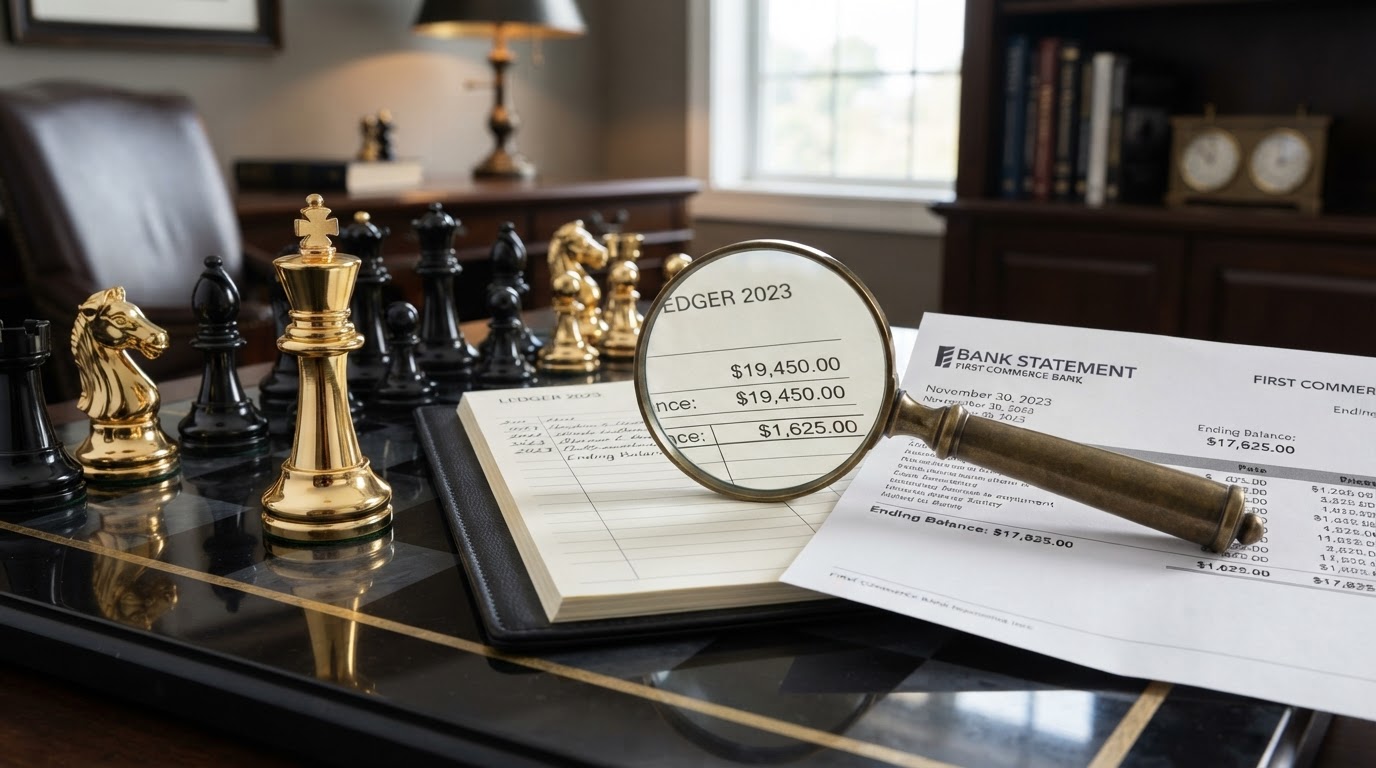
When your books do not match your bank statements, every report you rely on is suspect. Your profit and loss statement, your balance sheet, and your cash flow report all build on the transactions in your books. If those transactions do not agree with what your bank actually shows, your reports are wrong and your decisions rest on numbers you cannot trust. This guide explains why your books do not match your bank statements and how to reconcile them so they agree every month.
If you are new to the reconciliation process itself, start with our guide on what bank reconciliation is and why it matters before working through these steps. This article focuses on the specific reasons books and bank statements diverge and how to bring them back together.
What a Mismatch Between Books and Statements Means
Your bank statement is the record your bank produces showing every transaction that cleared your account during a period. Your books are the record you keep of every transaction you entered. In a clean set of books, every transaction on the statement has a matching entry in your books, and every entry in your books either appears on the statement or is a timing difference you can explain. When the two do not agree and you cannot explain the difference, something in your books is wrong.
The problem is not just the balance. If your books do not match your statement, your profit and loss statement may show the wrong revenue or expenses. Your balance sheet may overstate or understate your cash. And your cash flow report may paint a picture that does not reflect reality. Reconciling your books to your statements is the only way to make every report trustworthy again.
Common Causes of Books Not Matching Statements
Books and bank statements disagree for predictable reasons. Understanding the cause tells you where to look and how to fix it.
- Transactions recorded in your books but not on the statement. A payment or deposit you entered in your books that has not cleared the bank yet. These are normal timing differences, not errors, but they keep your balances from agreeing until they clear.
- Transactions on the statement but not in your books. A bank fee, an interest deposit, or an electronic payment that hit your bank account but was never entered in your books. Your bank shows it, but your books do not, so the two disagree.
- Duplicate transactions. A transaction imported twice or entered manually and again by a bank feed. The same payment appears twice in your books but only once on the statement, inflating your book balance.
- Transactions in the wrong account. A payment that cleared one bank account but was recorded against another. Both accounts are wrong by the same amount in opposite directions, and neither matches its statement.
- Transfers recorded in only one direction. Money moved between accounts that was recorded in one account but not the other. One balance is too high and the other is too low, and neither statement reconciles.
- Bank fees and interest never recorded. Monthly maintenance fees, overdraft charges, wire fees, and interest credits that hit your bank automatically but were never entered in your books. They are small but they keep your reconciliation from agreeing.
How to Reconcile Your Books to Your Bank Statements
Reconciliation is a disciplined routine that matches every transaction on your statement to your books, records every missing entry, removes every duplicate, and confirms the ending balance agrees to zero. Work through these steps in order, every month, until your books match your statements.
1. Gather Every Statement and Your Books for the Same Period
Pull every business bank statement and your bookkeeping records for the exact same period. If you have multiple accounts, pull every statement for every account. You cannot reconcile if you are looking at different dates or missing an account entirely.
Why it matters. Reconciliation only works when you compare the same period across the same accounts. Missing one statement guarantees the reconciliation will fail.
Common mistake. Reconciling only the checking account and forgetting the savings or credit card account where the discrepancy actually sits.
2. Confirm the Starting Balance Agrees
Confirm that the opening balance on your bank statement matches the starting balance in your books for that period. If the starting balance is already wrong, every number after it will be wrong too. If the starting balance does not agree, go back to the last month that reconciled cleanly and start from there.
Why it matters. A wrong starting balance makes every comparison after it meaningless. You have to begin from a number you know is correct.
Common mistake. Assuming the starting balance is right because it carried over from last month. If last month had an error, it carries forward silently.
3. Match Every Deposit on the Statement to Your Books
Go through every deposit shown on your bank statement and find the matching entry in your books. If a deposit appears on the statement but not in your books, your revenue is understated and your book balance is too low. Record the missing deposit in the correct account.
Why it matters. Every deposit on the statement must exist in your books. A missing deposit means your revenue and your cash are both understated.
Common mistake. Assuming every deposit was recorded because it came through the bank feed. Feeds drop transactions, and manual deposits are easy to miss.
4. Match Every Check and Electronic Payment to Your Books
Go through every check and electronic payment on your bank statement and find the matching entry in your books. If a payment appears on the statement but not in your books, your expenses are understated and your book balance is too high. Record the missing payment in the correct expense category.
Why it matters. Every payment that cleared the bank must be in your books. A missing payment overstates your cash and understates your expenses.
Common mistake. Only matching deposits and skipping payments because they seem smaller. Missing payments are just as common and just as damaging.
5. Record Bank Fees, Charges, and Interest
Review your bank statement for monthly maintenance fees, overdraft charges, wire fees, returned item fees, and interest credits. These hit your bank automatically but are easy to miss in your books. Record each fee as an expense and each interest credit as income in the correct account.
Why it matters. Bank fees and interest are small but they accumulate. Every unrecorded fee is a difference that keeps your reconciliation from agreeing.
Common mistake. Ignoring bank fees because the amount seems minor. Small fees add up and prevent your books from matching your statement.
6. Identify Transactions on the Statement Missing From Your Books
List every transaction that appears on your bank statement but has no matching entry in your books. These are unrecorded transactions, and each one is a reason your books do not match your statement. For a broader approach to finding gaps, see our guide on how to identify missing transactions in your books.
Why it matters. A clear list of missing transactions is your work plan. Each item is a transaction that needs to be recorded before your books will agree with your statement.
Common mistake. Scrolling through the bank feed instead of comparing the statement line by line. The feed shows transactions but does not tell you which ones are already recorded.
7. Identify Transactions in Your Books Missing From the Statement
List every transaction in your books that has not appeared on your bank statement yet. These are usually timing differences, like a check you wrote that has not cleared or a deposit you recorded on the last day of the month that arrives the next day. Confirm each one is a real timing difference and not a recording error.
Why it matters. Outstanding items are normal, but you have to identify them to explain the difference. Without a list, you cannot tell a timing difference from a real error.
Common mistake. Treating every unexplained difference as a timing difference without confirming it. Some are real errors disguised as timing.
8. Search for Duplicate Transactions
Search your books for transactions with the same amount and date. A duplicate inflates your book balance because the same payment appears twice in your books but only once on the statement. Remove the duplicate, keeping the original, and confirm the balance adjusts. For more on this problem, see our guide on how to fix messy bookkeeping records.
Why it matters. A single duplicate can throw your book balance off by hundreds or thousands of dollars. Finding it is usually quick once you know to look.
Common mistake. Deleting both entries instead of just the duplicate. Always keep the original and remove only the copy.
9. Check for Transactions in the Wrong Account
If you have multiple bank accounts, check whether any transaction was recorded against the wrong account. A payment that cleared account A but was recorded in account B makes account B too low and account A too high. The total might look right, but each account is wrong. Move the transaction to the correct account and confirm both balances adjust.
Why it matters. Wrong account errors are invisible if you only look at one account. You have to reconcile every account to catch them.
Common mistake. Reconciling only the checking account and ignoring the savings or credit card account where the error actually sits.
10. Review Transfers Between Accounts
Confirm every transfer between business accounts was recorded in both accounts and in the right direction. A transfer recorded in the receiving account but not the sending account leaves one balance too high and the other too low. Fix the transfer so both accounts reflect the movement of cash.
Why it matters. Transfers affect two accounts at once, so a single error creates two mismatches. Fixing the transfer fixes both.
Common mistake. Recording the transfer in one account and forgetting the other, or recording it in the wrong direction.
11. Review Automatic Payments and Direct Debits
List every automatic payment and direct debit that hits your account each month, such as software subscriptions, insurance, loan payments, and utility bills. Confirm each one is recorded in your books. Automatic payments are easy to miss because they happen without you touching them.
Why it matters. Automatic payments are silent. If one is not recorded, your book balance is too high and your expenses are understated.
Common mistake. Assuming the bank feed caught every automatic payment. Feeds drop transactions, and new automatic payments are easy to miss.
12. Reconcile Every Credit Card Statement Too
If your business uses credit cards, reconcile each card statement the same way you reconcile your bank accounts. Match every charge and payment to your books, record any missing transactions, and confirm the ending balance agrees. Credit card reconciliions fail for the same reasons bank reconciliations do, and skipping them leaves a gap in your books.
Why it matters. Credit card accounts are just as important as bank accounts. An unreconciled card balance distorts your expenses and your cash flow.
Common mistake. Reconciling the bank accounts but skipping the credit cards. Card charges are a common source of unrecorded expenses.
13. Confirm the Ending Balance Agrees to Zero
After every transaction is matched, every missing entry recorded, every duplicate removed, and every fee and interest posted, confirm that the adjusted book balance agrees with the adjusted bank balance. The difference should be zero. If it is not, go back through the steps until you find what is still out of balance. A reconciliation that does not agree to zero is not finished.
Why it matters. The zero difference is the proof that your books match your statement. Anything else means the work is incomplete.
Common mistake. Forcing the balance to agree with an adjustment instead of finding the actual cause. That hides the problem and it returns next month.
14. Document Every Adjustment
Write down every adjustment you made, what caused it, and how you fixed it. This record helps you spot patterns, prevents the same error from recurring, and gives your bookkeeper or tax preparer a clear trail. A documented adjustment is one you can trust and repeat. An undocumented adjustment is a mystery that will cause confusion later.
Why it matters. A clear audit trail separates a real fix from a guess. Without it, nobody can verify the adjustment was correct.
Common mistake. Making adjustments without noting what caused them. Months later, nobody can tell whether the fix was based on a receipt or a guess.
15. Build a Monthly Reconciliation Routine
Reconcile every account every month, without fail. A short scheduled session each month catches errors while they are small and easy to find, before they compound into a frustrating search through months of records. The longer you wait between reconciliations, the harder it becomes to trace a discrepancy back to its source.
Why it matters. A monthly routine turns reconciliation from a crisis into a habit. Errors stay small, differences stay explainable, and your books stay trustworthy.
Common mistake. Fixing the current mismatch and then going back to the old habits that caused it. Without a routine, the mismatch returns.
Two Real Small Business Examples
Example: A small plumbing company. A plumbing business owner could not get his books to match his bank statement for three months straight. He kept making small adjustments to force the balances to agree, but the difference returned every month. A bookkeeper reconciled the accounts properly and found that a recurring software subscription had been charging the business account automatically but was never recorded in the books. The bank showed the payment each month, but the books did not. After recording the missing payments and building a monthly reconciliation routine, the books matched the statement every month going forward.
Example: A growing marketing agency. A marketing agency with six employees noticed that the book balance for the checking account was consistently higher than the bank statement showed. The owner had been recording credit card payments to the checking account instead of the credit card account, so every card payment appeared in the wrong place. The checking account was overstated and the credit card account was understated. After moving each transaction to the correct account and reconciling both the bank and the credit card statements, every account matched its statement and the owner could trust her reports again.
Printable Bank Statement Reconciliation Checklist
Use this checklist to reconcile your books to your bank and credit card statements every month. Print it, save it, or share it with whoever handles your books.
- Gather every bank and credit card statement and your books for the same period.
- Confirm the starting balance agrees with the last reconciled month.
- Match every deposit on the statement to your books and record any missing.
- Match every check and electronic payment to your books and record any missing.
- Record every bank fee, charge, and interest credit.
- List every transaction on the statement that is missing from your books.
- List every transaction in your books that has not cleared the statement yet.
- Search for and remove duplicate transactions, keeping the original.
- Check for transactions recorded against the wrong account.
- Confirm every transfer between accounts is recorded in both directions.
- Review every automatic payment and direct debit for recording.
- Reconcile every credit card statement the same way as bank accounts.
- Confirm the adjusted book balance agrees with the adjusted bank balance to zero.
- Document every adjustment, what caused it, and how you fixed it.
- Build a monthly reconciliation routine so the mismatch does not return.
Getting Started
Books that do not match bank statements are almost always caused by a transaction that is missing, duplicated, or recorded in the wrong place. Work through the steps above, one account at a time, and the difference will narrow until it disappears. If the gap is too large or too old to trace alone, or if you would rather spend your time running your business, the best next step is a conversation about where your books stand today.
Want books that match your statements every month? Explore our bookkeeping services and let us reconcile your accounts and keep them accurate. We handle bookkeeping and payroll. We do not prepare income tax returns, offer tax planning, or perform audits, but we keep your books accurate and organized so you can run your business and your tax preparer can do their part efficiently.
Frequently Asked Questions
Why do my books not match my bank statements?
Your books and bank statements disagree when a transaction appears in one place but not the other. The most common reasons are transactions on the statement that were never recorded in your books, transactions in your books that have not cleared the bank yet, duplicate entries, transactions in the wrong account, and bank fees or interest that were never entered. Reconciliation is the process of matching every transaction in both places so the difference is zero.
How often should I reconcile my books to my bank statements?
Every month, for every account. A monthly reconciliation catches errors while they are small and easy to trace. The longer you wait, the harder it becomes to find the transaction that caused the difference, because more transactions pile up between the error and the discovery.
What is the difference between a timing difference and a real error?
A timing difference is a transaction that is recorded in your books but has not cleared the bank yet, like a check you wrote that has not been cashed. A real error is a transaction that is missing, duplicated, or recorded in the wrong account. Timing differences resolve themselves when the transaction clears. Real errors require a correction.
Should I just adjust the balance to make it agree?
No. Adjusting the balance without finding the cause hides the error instead of fixing it. A missing transaction or a duplicate affects your profit, your expenses, and your records. Find the actual transaction that caused the difference, record it or remove it correctly, and confirm the reconciliation agrees to zero before you move on.
Do I need to reconcile my credit card statements too?
Yes. Credit card accounts are just as important as bank accounts. An unreconciled card balance distorts your expenses and your cash flow. Reconcile each card statement the same way you reconcile your bank accounts, matching every charge and payment to your books.
What does it mean when the difference keeps coming back every month?
It usually means the underlying cause was never fixed. If you adjust the balance to agree without finding the actual transaction that caused the difference, the same error carries forward and the mismatch returns. Trace the difference back to the specific transaction, fix it, and document the fix so it does not recur.
Can Chess Bookkeeping & Payroll help me reconcile my books to my statements?
Yes. Reconciling your books to your bank and credit card statements is core to what we do. We match every transaction, find and fix every discrepancy, and deliver books that agree with your statements every month. We handle bookkeeping and payroll. We do not prepare income tax returns, offer tax planning, or perform audits, but we keep your books accurate and organized so your tax preparer can do their part efficiently.
Need help getting your books in order?
We focus exclusively on bookkeeping and payroll. Let's talk about where your books stand today.
Get StartedReady to simplify your books and payroll?
Schedule a consultation and let's talk about how precise bookkeeping and reliable payroll can give your business the clarity it deserves.