
What California Small Businesses Should Know About Bookkeeping
California small businesses face the same bookkeeping fundamentals as any business, with a few state specific details to keep in mind. This guide covers clean records, monthly reconciliations, cash flow, payroll sync, and how to choose a bookkeeper who understands the California market.
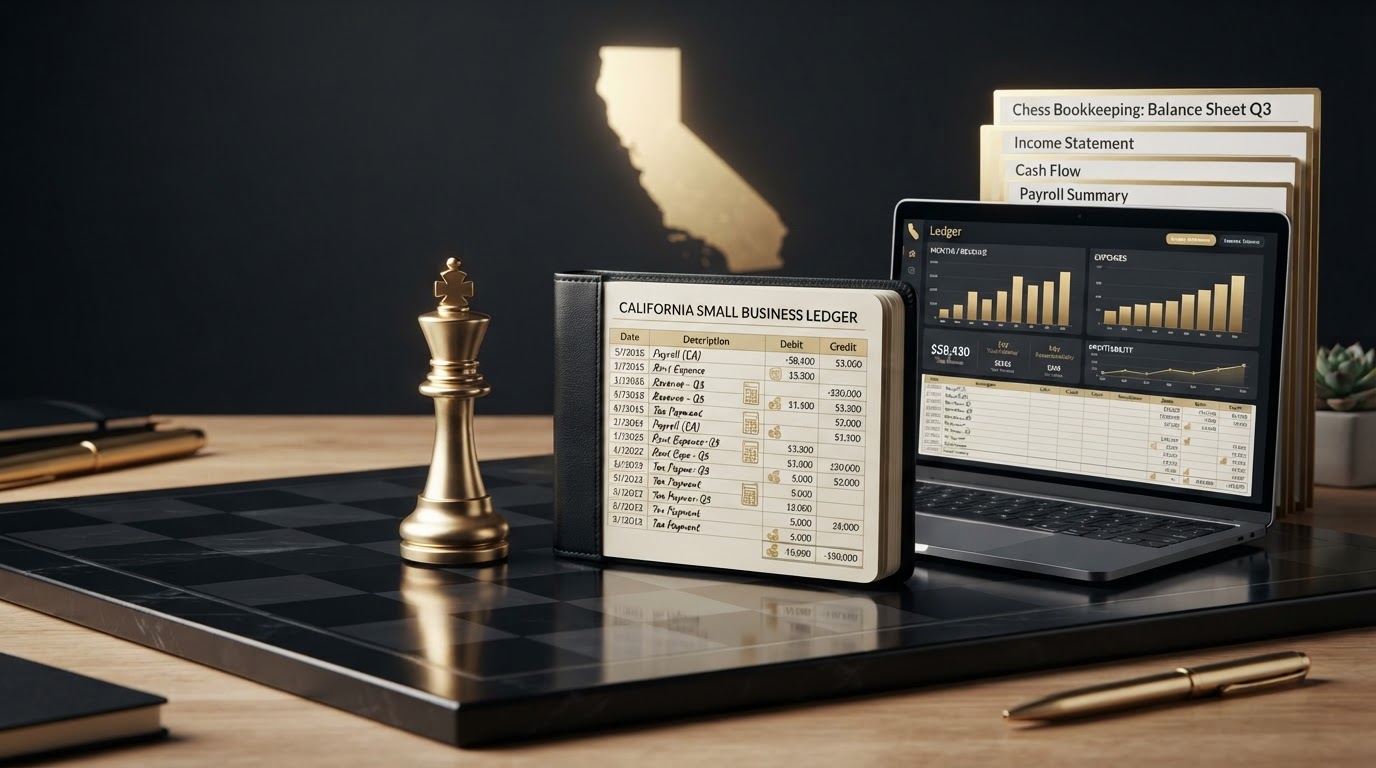
Bookkeeping for a California small business comes down to the same fundamentals as any business: clean records, monthly reconciliations, clear cash flow, and payroll records that stay in sync with the books. The California part is mostly about knowing which state details apply to you and confirming them with the right source rather than guessing.
This guide covers what California small businesses should know about bookkeeping, from keeping clean records to choosing a bookkeeper who understands the California market. If you are new to the fundamentals, it helps to start with our guide on why every small business needs professional bookkeeping before you read on.
Why Bookkeeping Matters for California Businesses
California is a busy market for small businesses, and the pace leaves little room for messy books. When your records are clean and current, you can see whether the business is making money, whether your cash flow is healthy, and whether your payroll is tying to the bank. When your records fall behind, every one of those questions turns into a guess.
Good bookkeeping also makes every other part of running the business easier. A clean set of books means your reports rest on real numbers, your payroll records match your expenses, and any conversation with a lender, a partner, or a tax preparer starts from the same data. The fundamentals do not change because you are in California. What changes is which state details apply to you, and those are the parts to confirm with the right source.
Keeping Clean Financial Records
Clean records start with separating business and personal finances. A dedicated business bank account and a business credit card keep your transactions in one place and make reconciliation possible. When business and personal spending mix, every reconciliation becomes a sorting exercise and your books lose accuracy.
From there, clean records mean every transaction is recorded, categorized, and supported by a document. Cloud based accounting software that connects to your bank and credit card feeds keeps transactions flowing in automatically, and a bookkeeper categorizes them, reconciles them, and prepares your statements inside the same software. You see the same numbers your bookkeeper sees, in real time, from any device.
Monthly Reconciliation Basics
Reconciliation is the monthly check that your books match your bank and credit card statements. Each month, after your statements arrive, your bookkeeper compares each transaction in your books to the statement, confirms the balances tie, and investigates anything that does not match. The goal is a reconciled set of accounts where the book balance equals the bank balance.
Monthly reconciliation catches errors, missing transactions, and duplicate entries while they are still small. Waiting longer turns a quick review into a long cleanup. If your books are already behind, a bookkeeper can plan a catch up before returning to a monthly rhythm. The same monthly discipline applies whether you are in Rancho Cucamonga, the Inland Empire, or anywhere else in the state.
Example: A California Cafe Owner Getting Organized
Example: A California cafe owner getting organized. Consider a cafe owner in California with eight employees. The owner has been handling the books personally and is always about a month behind. Every month end becomes a scramble to reconcile the bank account, categorize expenses, and figure out whether the food cost numbers make sense. The owner is spending evenings and weekends on work that never quite finishes.
The owner hires a remote bookkeeper. During onboarding, the bookkeeper sets up read only access to the business bank account, the credit card, and the point of sale system. They review the chart of accounts and split food purchases into separate categories so the owner can see true food cost. They also find three months of unreconciled transactions from a busy stretch last summer and clean them up. After onboarding, the books stay current each month. The owner receives a reconciled set of accounts, a profit and loss statement, and a balance sheet on a predictable schedule, plus a short note flagging anything unusual. The time reclaimed goes back into running the cafe.
Seeing Your Cash Flow Clearly
Cash flow is the difference between the money coming in and the money going out, and it is where most small business problems show up first. Clean books show your cash flow in real time, not weeks later. When your records are current, you can see whether you have enough to cover payroll, whether a slow month is a trend or a blip, and whether your expenses are growing faster than your revenue.
A bookkeeper keeps those numbers current so your decisions rest on real data instead of a guess. When your books are behind, you make decisions blind, and a cash problem can hide until it is expensive to fix. Current books turn cash flow from a worry into a number you can actually manage.
Keeping Books and Payroll in Sync
For California businesses with employees, bookkeeping and payroll are connected. Payroll touches your bank account, your expense categories, and your liability accounts every time you run it. When bookkeeping and payroll are handled by separate people who do not communicate, the records drift apart and reconciliation becomes a monthly headache.
A service that handles both bookkeeping and payroll keeps those records in sync. Pay calculations, direct deposit, payroll reports, and employee pay records all flow into the same set of books. That reduces errors and saves time at every close. For a deeper look at how those records come together, see our guide on what to expect when hiring an outsourced bookkeeper.
Example: A California Retail Shop Syncing Payroll
Example: A California retail shop syncing payroll. Take a retail shop in California that recently grew from five employees to fourteen. The owner was handling bookkeeping personally and outsourcing payroll to a separate provider. Each month, the payroll reports did not match what landed in the bookkeeping software, and the owner spent hours reconciling the difference.
The owner moved bookkeeping and payroll to one remote service that handled both. Pay calculations, direct deposit, payroll reports, and employee pay records all flowed into the same books. Reconciliation time dropped sharply because the records no longer drifted apart. The owner also stopped being the bridge between two providers who did not talk to each other. The point is not that one approach is always better. It is that growing businesses often reach a point where handling both together is simpler and more accurate than splitting them.
California Details to Confirm
The bookkeeping fundamentals are the same everywhere. The California details are the parts that can differ from federal rules and can change over time. Rather than state any specific rule, rate, or deadline as fact, treat the following as a list of topics to confirm with the relevant California agency or a licensed professional.
| Topic | What to confirm |
|---|---|
| Tax accounts | Which state tax accounts apply to your business and how they are recorded in your books. |
| Payroll rules | Which payroll rules govern your crew and how they affect your pay calculations and records. |
| Recordkeeping | Which recordkeeping rules apply to your industry and how long to keep each type of record. |
| Industry specifics | Any state specific details for your industry that affect how you categorize or report transactions. |
Rules and rates can change, and they can differ from federal rules. Verify the current requirements with the relevant California agency or a licensed professional before you rely on them. Your bookkeeper keeps the records organized so you have the numbers ready when you confirm those details.
Choosing a Bookkeeper Who Knows California
Not every bookkeeper is the right fit. When you evaluate a service for your California business, look for clear scope, consistent communication, secure access practices, and experience with businesses your size. The service should tell you exactly what is included each month, what costs extra, and what they do not handle at all.
Ask whether bank and credit card reconciliation are both included. Ask what reports you receive, in what format, and by what date. Ask how they access your accounts and whether they use read only access. Ask whether they also handle payroll or only bookkeeping. Get the scope in writing. For a full list of what to confirm before you hire, see our guide on questions to ask before hiring a bookkeeping service.
Printable California Bookkeeping Checklist
Use this checklist to keep your California small business books on track. Print it, save it, or bring it to your consultation so you cover every category.
- Keep a dedicated business bank account and a business credit card separate from personal accounts.
- Run cloud based accounting software that connects to your bank and credit card feeds.
- Record every business transaction and categorize it consistently each month.
- Reconcile your bank and credit card accounts monthly after the statements arrive.
- Review your chart of accounts and adjust categories that no longer fit your business.
- Track accounts receivable and accounts payable so you know what is owed to and by you.
- Keep payroll records in sync with your books each pay period.
- Confirm your payroll system integrates with your accounting software or plan how records transfer.
- Document how you record owner contributions and withdrawals so your bookkeeper follows your method.
- Identify any months where your books are behind or unreconciled so cleanup can be planned.
- Share access with read only permissions and avoid sending full login credentials.
- Choose a secure document sharing method and avoid sending financial information over email.
- Confirm which California tax accounts, payroll rules, and recordkeeping rules apply to you with the relevant agency or a licensed professional.
Common Bookkeeping Mistakes
- Mixing business and personal finances. When business and personal spending mix, every reconciliation becomes a sorting exercise and your books lose accuracy. Keep a dedicated business bank account and credit card so your transactions stay in one place.
- Letting reconciliation slip. If you stop reconciling monthly, errors and missing transactions pile up until they become a long cleanup. Reconcile bank and credit card accounts each month right after the statements arrive.
- Splitting bookkeeping and payroll. When bookkeeping and payroll are handled by separate people who do not communicate, the records drift apart. Keep them with one service whenever possible so the records stay in sync.
- Guessing at California details. State specific tax accounts, payroll rules, and recordkeeping rules can differ from federal rules and can change. Confirm the current requirements with the relevant California agency or a licensed professional instead of guessing.
- Expecting tax preparation from a bookkeeper. A bookkeeper keeps your books accurate and organized. They do not prepare income tax returns, offer tax planning, or perform audits. Understand the boundary so your expectations match the service.
- Sharing full login access. Giving a bookkeeper your full banking login creates unnecessary risk. Use read only access so your bookkeeper can view accounts without the ability to move money.
Getting Started
California small business bookkeeping comes down to clean records, monthly reconciliations, clear cash flow, and payroll records that stay in sync. When those fundamentals hold, the state details become a list of topics to confirm with the right source instead of a source of stress. If you are spending evenings on the books or your records are consistently behind, the best next step is a conversation about your business and your books.
Want help keeping your California small business books in order? Explore our bookkeeping services and let us walk through scope, deliverables, communication, and security for your business. We handle bookkeeping and payroll, not income tax return preparation, tax planning, or audits, so your tax preparer can do their part efficiently. For state specific legal or tax questions, we point you to the relevant California agency or a licensed professional.
Frequently Asked Questions
What should California small businesses know about bookkeeping?
California small businesses should know that bookkeeping comes down to clean records, monthly reconciliations, clear cash flow, and payroll records that stay in sync with the books. The fundamentals are the same as any business. The state specific details, such as which tax accounts apply to your business and which rules govern your payroll, are the parts to confirm with the relevant California agency or a licensed professional rather than guess at.
Do California businesses need a bookkeeper located in California?
No. Remote bookkeeping works well when the service understands the California market and communicates clearly. What matters more than a street address is whether the bookkeeper understands small business bookkeeping, follows secure access practices, and communicates on a predictable schedule. A remote service that understands California can be a better fit than a service down the street that does not specialize in small businesses.
How often should a California small business reconcile its books?
Most small businesses reconcile bank and credit card accounts monthly, right after the statements arrive. Monthly reconciliation catches errors, missing transactions, and duplicate entries while they are still small. Waiting longer turns a quick review into a long cleanup. If your books are already behind, a bookkeeper can plan a catch up before returning to a monthly rhythm.
How do I keep bookkeeping and payroll in sync in California?
Keep bookkeeping and payroll with one service whenever possible, or make sure your bookkeeper and payroll provider share records each pay period. Payroll touches your bank account, your expense categories, and your liability accounts every time you run it. When the two stay in sync, your books and your payroll records match and reconciliation becomes routine instead of a monthly headache.
Will a California bookkeeper prepare my income tax return?
A bookkeeper keeps your books accurate and organized, which makes tax time smoother for whoever prepares your return. But bookkeeping is not tax preparation. We do not prepare income tax returns, offer tax planning, or perform audits. We keep your records clean so your tax preparer or auditor can do their part efficiently. Confirm any tax question with the relevant California tax agency or a licensed professional.
What California details should I confirm with a professional?
Confirm which tax accounts apply to your business, which payroll rules govern your crew, and which recordkeeping rules apply to your industry with the relevant California agency or a licensed professional. Rules and rates can change, and they can differ from federal rules. Treat any summary as a starting point and verify the current requirements before you rely on them.
Can Chess Bookkeeping & Payroll handle my California bookkeeping?
Yes. We handle remote bookkeeping and payroll for small businesses across California and nationwide. We do not prepare income tax returns, offer tax planning, or perform audits, but we keep your books accurate and organized so you can run your business and your tax preparer can do their part efficiently. For state specific legal or tax questions, we point you to the relevant California agency or a licensed professional.
Need help getting your books in order?
We focus exclusively on bookkeeping and payroll. Let's talk about where your books stand today.
Get StartedReady to simplify your books and payroll?
Schedule a consultation and let's talk about how precise bookkeeping and reliable payroll can give your business the clarity it deserves.