
How to Find a Reliable Bookkeeper in California
Finding a reliable bookkeeper in California comes down to clear scope, consistent communication, secure access, and experience with businesses your size. This guide walks through what to look for, what to ask, and how to confirm the California details that apply to you.
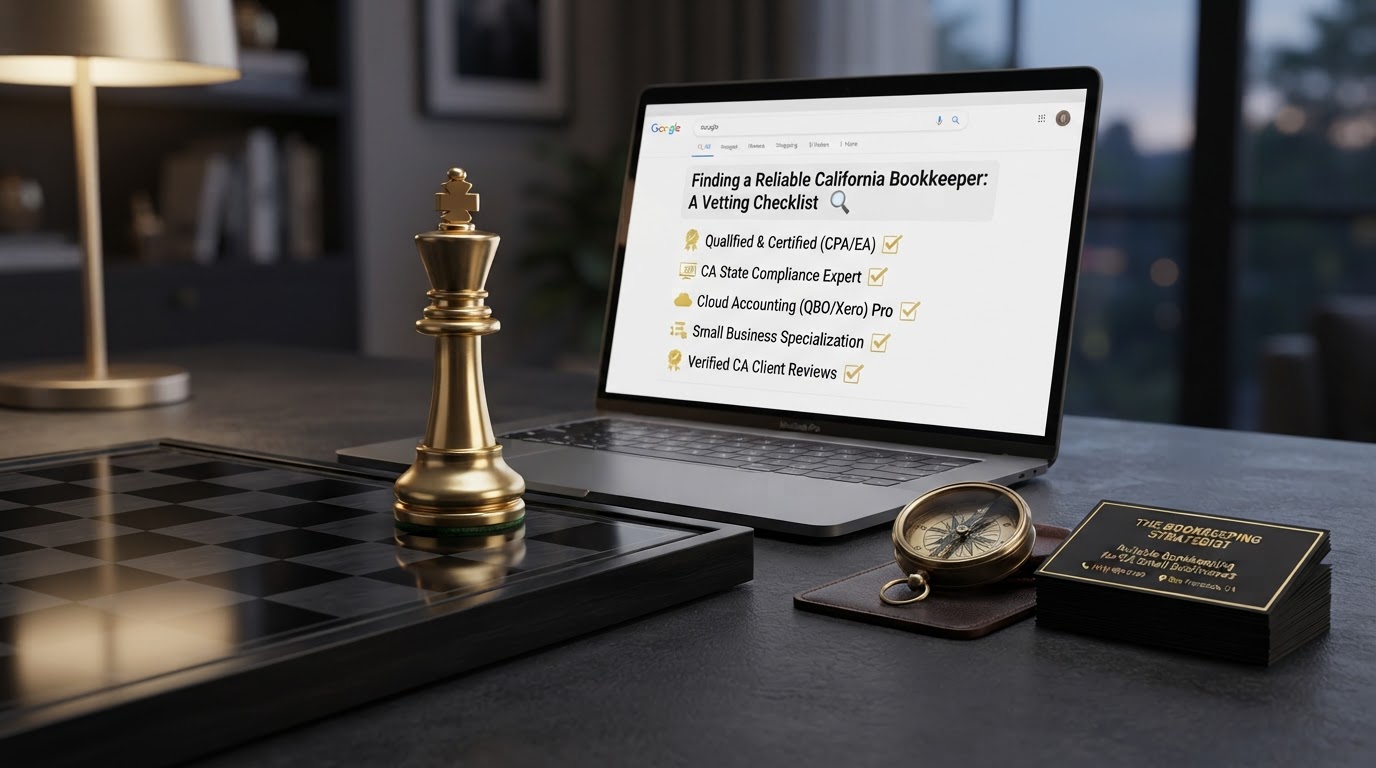
A reliable bookkeeper in California is one who keeps your books accurate, communicates on a predictable schedule, uses secure access, and tells you exactly what is included and what is not. The fundamentals are the same as any state. The California part is knowing which state details apply to you and confirming them with the right source instead of guessing.
This guide walks through how to find a reliable bookkeeper in California, from where to look to what to ask before you hire. If you are new to what a bookkeeper actually does, it helps to start with our guide on what a bookkeeper does for a small business before you read on.
What a Reliable Bookkeeper Actually Looks Like
A reliable bookkeeper is consistent before anything else. Your books stay current each month, your reconciliations happen on a schedule, and you receive your reports by a date you can count on. Reliability is not a credential or a promise. It is a pattern you can see in how the service works.
The same pattern shows up in how the bookkeeper communicates. A reliable service answers your questions in plain language, flags anything unusual in your books, and tells you what is included and what costs extra. When the scope is clear, you are not surprised by an add on charge or a missing report at month end. Reliability also means the bookkeeper understands the boundary of the work. Bookkeeping is not income tax return preparation, tax planning, or auditing, and a reliable service says so plainly.
Where to Look for a California Bookkeeper
You do not need a bookkeeper on the same block. A remote bookkeeper who understands the California market can handle your books whether you are in Rancho Cucamonga, the Inland Empire, or anywhere else in the state. What matters more than a street address is whether the bookkeeper understands small business bookkeeping, follows secure access practices, and communicates on a predictable schedule.
Start with the work you need done. Make a short list of what you want handled each month, then look for a service whose scope matches that list. A service that also handles payroll can keep your books and your pay records in sync, which saves time at every close. For a deeper look at how that combination works, see our guide on what to expect when hiring an outsourced bookkeeper.
What to Look For
When you compare services, look for clear scope, consistent communication, secure access, and experience with businesses your size. The table below covers the basics.
| What to check | Why it matters |
|---|---|
| Clear scope | You know what is included each month, what costs extra, and what is not handled at all. |
| Monthly reconciliation | Bank and credit card accounts are reconciled each month so errors stay small. |
| Reports on a schedule | You receive your profit and loss, balance sheet, and notes by a date you can count on. |
| Read only access | The bookkeeper views your accounts without the ability to move money. |
| Payroll experience | The service can keep books and pay records in sync if you have employees. |
| Plain boundaries | The service says plainly that bookkeeping is not tax preparation or auditing. |
Example: A California Cafe Owner Vetting a Bookkeeper
Example: A California cafe owner vetting a bookkeeper. Consider a cafe owner in California with ten employees. The owner has been handling the books personally and is always a month behind. The owner talks to two services. The first quotes a low monthly fee but will not say what is included. The second walks through the chart of accounts, confirms bank and credit card reconciliation are both included, and explains that payroll is handled in the same system so the records stay in sync.
The owner chooses the second service. During onboarding, the bookkeeper sets up read only access to the business bank account, the credit card, and the point of sale system. They find three months of unreconciled transactions from a busy stretch and clean them up. After onboarding, the books stay current each month, and the owner receives a reconciled set of accounts and a short note flagging anything unusual on a predictable schedule. The time reclaimed goes back into running the cafe.
What to Ask Before You Hire
The questions you ask before you hire tell you more than any price quote. Ask whether bank and credit card reconciliation are both included. Ask what reports you receive, in what format, and by what date. Ask how the bookkeeper accesses your accounts and whether they use read only access. Ask whether they also handle payroll or only bookkeeping. Get the scope in writing.
For a full list of what to confirm before you hire, see our guide on questions to ask before hiring a bookkeeping service. The right questions surface the services that communicate clearly and expose the ones that hide scope behind a low fee.
Example: A California Retail Shop Comparing Two Services
Example: A California retail shop comparing two services. Take a retail shop in California that recently grew from six employees to fourteen. The owner was handling bookkeeping personally and outsourcing payroll to a separate provider. Each month, the payroll reports did not match what landed in the bookkeeping software, and the owner spent hours reconciling the difference.
The owner compared two services. The first handled only bookkeeping and left the owner bridging the gap with the payroll provider. The second handled both bookkeeping and payroll in one system, so pay calculations, direct deposit, payroll reports, and employee pay records all flowed into the same books. The owner chose the second service. Reconciliation time dropped sharply because the records no longer drifted apart, and the owner stopped being the bridge between two providers who did not talk to each other. The example shows how comparing scope, not just price, surfaces the more reliable fit.
Scope, Security, and Communication
A reliable bookkeeper keeps three things clear: scope, security, and communication. Scope means you know what is included each month and what costs extra. Security means the bookkeeper uses read only access and never asks for your full banking login. Communication means you receive your reports on a schedule and a short note when something needs your attention.
When all three are clear, you stop guessing about your books. Your reports rest on real numbers, your payroll records match your expenses, and any conversation with a lender, a partner, or a tax preparer starts from the same data. For help getting your records organized before you hire, see our guide on how to fix messy bookkeeping records.
California Details to Confirm
The bookkeeping fundamentals are the same everywhere. The California details are the parts that can differ from federal rules and can change over time. Rather than state any specific rule, rate, or deadline as fact, treat the following as a list of topics to confirm with the relevant California agency or a licensed professional.
| Topic | What to confirm |
|---|---|
| Tax accounts | Which state tax accounts apply to your business and how they are recorded in your books. |
| Payroll rules | Which payroll rules govern your crew and how they affect your pay calculations and records. |
| Recordkeeping | Which recordkeeping rules apply to your industry and how long to keep each type of record. |
| Industry specifics | Any state specific details for your industry that affect how you categorize or report transactions. |
Rules and rates can change, and they can differ from federal rules. Verify the current requirements with the relevant California agency or a licensed professional before you rely on them. Your bookkeeper keeps the records organized so you have the numbers ready when you confirm those details.
Printable Bookkeeper Vetting Checklist
Use this checklist to vet a bookkeeper for your California small business. Print it, save it, or bring it to your consultation so you cover every category.
- Confirm the service explains scope clearly and puts what is included in writing.
- Verify bank and credit card reconciliation are both included each month.
- Check that you receive your profit and loss, balance sheet, and notes on a predictable schedule.
- Confirm the bookkeeper uses read only access and never asks for your full banking login.
- Ask whether the service also handles payroll or only bookkeeping.
- Verify the service has experience with businesses your size and type.
- Confirm the service says plainly that bookkeeping is not income tax return preparation, tax planning, or auditing.
- Ask how the service flags unusual transactions or errors in your books.
- Check what happens when your books are behind and whether catch up is included.
- Confirm how the service shares reports and whether you see the same numbers in real time.
- Verify which California tax accounts, payroll rules, and recordkeeping rules apply to you with the relevant agency or a licensed professional.
- Ask how the service keeps your financial information secure and what tools it uses.
- Confirm the service communicates in plain language and answers questions without jargon.
Common Mistakes When Choosing a Bookkeeper
- Choosing on price alone. A low monthly fee means little if the scope is unclear. A service that will not say what is included often charges extra for reconciliation, reports, or catch up. Compare scope first, then price.
- Skipping the security question. Giving a bookkeeper your full banking login creates unnecessary risk. Use read only access so your bookkeeper can view accounts without the ability to move money.
- Splitting bookkeeping and payroll. When bookkeeping and payroll are handled by separate people who do not communicate, the records drift apart. Keep them with one service whenever possible so the records stay in sync.
- Guessing at California details. State specific tax accounts, payroll rules, and recordkeeping rules can differ from federal rules and can change. Confirm the current requirements with the relevant California agency or a licensed professional instead of guessing.
- Expecting tax preparation from a bookkeeper. A bookkeeper keeps your books accurate and organized. They do not prepare income tax returns, offer tax planning, or perform audits. Understand the boundary so your expectations match the service.
- Ignoring communication style. If a bookkeeper answers questions in jargon or takes days to reply during onboarding, that pattern continues after you hire. Look for plain language and predictable replies from the start.
Getting Started
Finding a reliable bookkeeper in California comes down to clear scope, consistent communication, secure access, and experience with businesses your size. When those four hold, the state details become a list of topics to confirm with the right source instead of a source of stress. If you are spending evenings on the books or your records are consistently behind, the best next step is a conversation about your business and your books.
Want help finding a reliable bookkeeper for your California business? Explore our bookkeeping services and let us walk through scope, deliverables, communication, and security for your business. We handle bookkeeping and payroll, not income tax return preparation, tax planning, or audits, so your tax preparer can do their part efficiently. For state specific legal or tax questions, we point you to the relevant California agency or a licensed professional.
Frequently Asked Questions
How do I find a reliable bookkeeper in California?
Look for a bookkeeper who explains scope clearly, communicates on a predictable schedule, uses secure read only access, and has experience with businesses your size. Ask what is included each month, what costs extra, and what they do not handle at all. Confirm any California tax or payroll questions with the relevant state agency or a licensed professional rather than guessing.
Does a California bookkeeper need to be located in California?
No. A remote bookkeeper who understands the California market can handle your books from anywhere. What matters more than a street address is whether the bookkeeper understands small business bookkeeping, follows secure access practices, and communicates on a predictable schedule. A remote service that knows California can be a better fit than a nearby service that does not specialize in small businesses.
What should I ask a bookkeeper before hiring them?
Ask whether bank and credit card reconciliation are both included, what reports you receive and by what date, how they access your accounts, and whether they also handle payroll or only bookkeeping. Get the scope in writing. For a full list of what to confirm, see our guide on questions to ask before hiring a bookkeeping service.
Will a California bookkeeper prepare my income tax return?
A bookkeeper keeps your books accurate and organized, which makes tax time smoother for whoever prepares your return. But bookkeeping is not tax preparation. We do not prepare income tax returns, offer tax planning, or perform audits. Confirm any tax question with the relevant California tax agency or a licensed professional.
How should a bookkeeper access my accounts?
Use read only access through your accounting software or your bank's secure connection, not your full login credentials. Read only access lets your bookkeeper view transactions and reconcile accounts without the ability to move money. Avoid sending full banking usernames and passwords over email or text.
What California details should I confirm with a professional?
Confirm which state tax accounts apply to your business, which payroll rules govern your crew, and which recordkeeping rules apply to your industry with the relevant California agency or a licensed professional. Rules and rates can change and can differ from federal rules. Treat any summary as a starting point and verify the current requirements before you rely on them.
Can Chess Bookkeeping & Payroll handle my California bookkeeping?
Yes. We handle remote bookkeeping and payroll for small businesses across California and nationwide. We do not prepare income tax returns, offer tax planning, or perform audits, but we keep your books accurate and organized so you can run your business and your tax preparer can do their part efficiently. For state specific legal or tax questions, we point you to the relevant California agency or a licensed professional.
Need help getting your books in order?
We focus exclusively on bookkeeping and payroll. Let's talk about where your books stand today.
Get StartedReady to simplify your books and payroll?
Schedule a consultation and let's talk about how precise bookkeeping and reliable payroll can give your business the clarity it deserves.