
How to Categorize Small Business Expenses
Consistent expense categorization is what makes your profit and loss statement trustworthy. This step by step guide walks through how to categorize small business expenses, with real examples and a printable checklist.
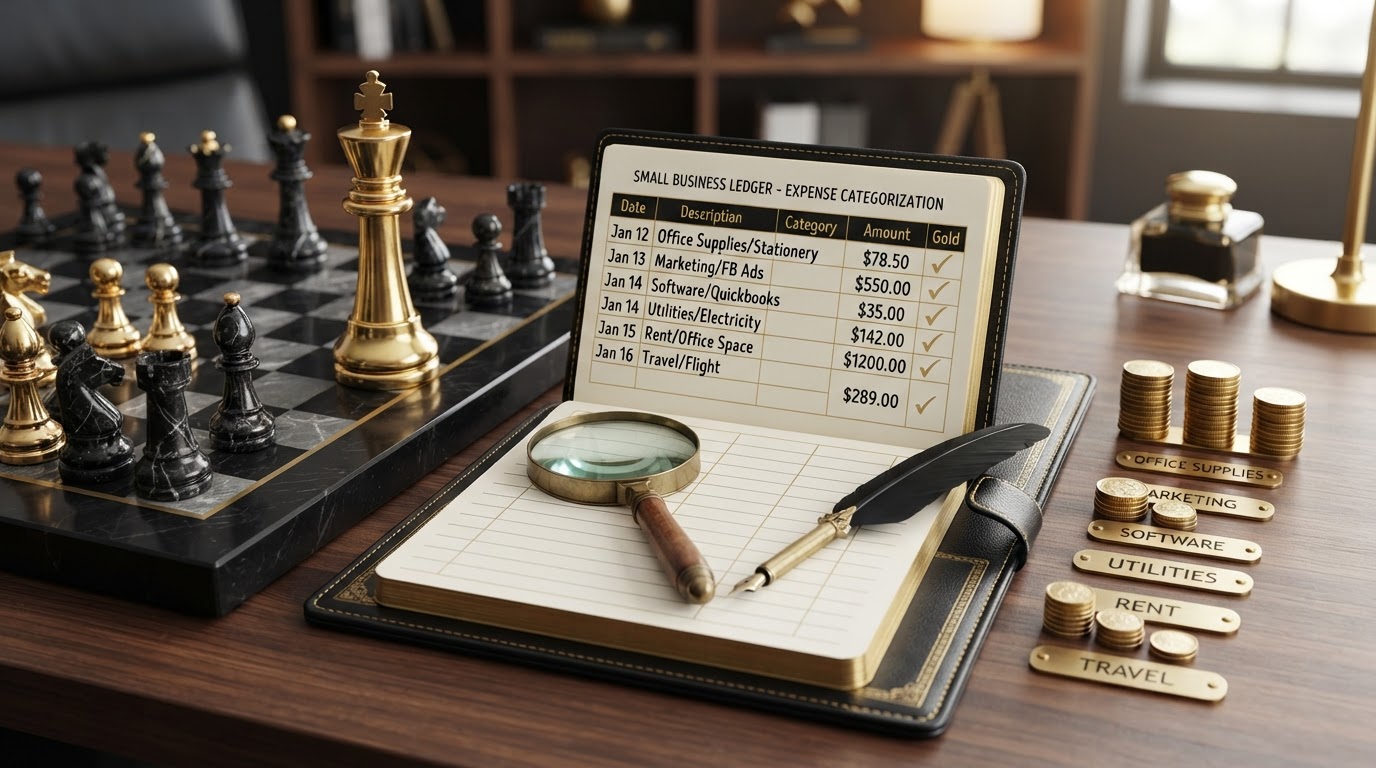
Categorizing small business expenses is the practice of sorting every transaction into the right account in your chart of accounts so your books reflect what actually happened. Consistent categorization is what makes your profit and loss statement trustworthy, your tax preparer efficient, and your business decisions grounded in real numbers. When expenses land in the wrong accounts, your reports mislead you and your cleanup costs grow every month.
This guide walks through how to categorize small business expenses from start to finish. It is written for owners who handle their own books and for teams who want a consistent routine. If your books are already behind, start with our guide on catch up bookkeeping and how to get back on track before you attempt a clean categorization pass.
How to Categorize Small Business Expenses
Categorizing expenses is a methodical process, not a quick scan. Work through these steps in order, one transaction and one account at a time, until every entry lands in the right account and your reports reflect what actually happened.
1. Start With a Clean Chart of Accounts
Your chart of accounts is the list of accounts you categorize transactions into. Before you categorize anything, review your chart of accounts and confirm every account is still in use, clearly named, and logically grouped. Remove duplicate accounts, merge accounts that serve the same purpose, and confirm every account maps to a real expense type. A cluttered chart of accounts makes categorization harder and your reports harder to read. For a full walkthrough, see our guide on what a chart of accounts is and why it matters.
Why it matters. Every category you assign comes from this list. If the list is messy, your categorization will be messy too.
Common mistake. Adding a new account for every unfamiliar transaction instead of finding the right existing account. Over time this fragments your reports into dozens of one entry accounts.
2. Separate Business and Personal Transactions
Before you categorize anything, confirm every transaction in your books belongs to the business. Move personal transactions out of your business accounts or mark them clearly as owner draws or owner contributions. Mixing personal and business transactions is the single most common cause of misclassified expenses and distorted reports. Keep a separate business bank account and a separate business credit card so the line stays clean.
Why it matters. Personal transactions in your business books inflate your expenses and distort your profit. Separating them first means every remaining transaction is a real business expense.
Common mistake. Categorizing a personal purchase as a business expense because it came through the business card. The account it came from does not make it a business expense.
3. Match Every Transaction to a Real Account
For every transaction, ask what it actually was and assign the account that matches that purpose. A software subscription goes to software expenses, fuel for a work vehicle goes to vehicle expenses, and ingredients for a restaurant go to cost of goods sold. Read the vendor name and the amount, then choose the account that reflects the real nature of the purchase. When in doubt, look up the vendor or ask the person who made the purchase.
Why it matters. The account you choose determines where the expense shows up on your reports. A wrong account means a wrong report.
Common mistake. Defaulting every unknown transaction to a generic account like office expenses or miscellaneous. This hides your real spending patterns and makes your reports useless.
4. Use Consistent Account Names
Use the same account name for the same type of expense every month. If you call delivery fees shipping and delivery one month and freight the next, your reports split one expense into two accounts and you lose the ability to compare month to month. Pick clear, standard names and stick with them. Consistency is what makes your reports comparable over time.
Why it matters. Reports are only useful when you can compare them across months and years. Inconsistent names break that comparison.
Common mistake. Renaming accounts mid year without merging the old account into the new one. The old name keeps a balance and the new name starts fresh, splitting one expense across two accounts.
5. Distinguish Cost of Goods Sold From Operating Expenses
If you sell products, separate the direct costs of producing or purchasing what you sell from your general operating expenses. Ingredients, raw materials, wholesale inventory purchases, and direct labor tied to production belong in cost of goods sold. Rent, utilities, insurance, and office supplies belong in operating expenses. Mixing them hides your true gross margin and makes your profit and loss statement misleading.
Why it matters. Cost of goods sold directly affects your gross profit. When it is mixed with operating expenses, you cannot tell how much it actually costs to produce what you sell.
Common mistake. Recording all inventory purchases as cost of goods sold at the time of purchase rather than tracking inventory and recognizing cost of goods sold when the product sells.
6. Track Meals and Entertainment Separately
Meals with clients, team meals, and business entertainment often have different treatment than general expenses. Track them in their own account so you can review them at year end and so your tax preparer can see them clearly. Record the business purpose and who attended for each meal so the entry has context. A single meals account with notes attached is far easier to review than meals scattered across multiple accounts.
Why it matters. Meals and entertainment are commonly reviewed at year end. A dedicated account with notes makes that review fast and accurate.
Common mistake. Recording every restaurant transaction as a meals expense, including personal lunches. Without a business purpose note, every entry is questionable at year end.
7. Categorize Travel Expenses Clearly
Track business travel in its own accounts or subaccounts, including airfare, lodging, ground transportation, and business meals while traveling. Separate travel from local mileage and everyday transportation so you can see what your travel actually costs. Record the destination and business purpose for each trip so the entries have context. Clear travel categorization makes year end review and reporting straightforward.
Why it matters. Travel is a distinct expense category that is often reviewed separately. Tracking it clearly lets you see your true travel costs.
Common mistake. Mixing personal travel with business travel in the same account. The business portion becomes impossible to identify later.
8. Record Asset Purchases Separately From Expenses
Large purchases that last more than one year, such as equipment, vehicles, or furniture, are assets rather than expenses. Record them in a fixed asset account, not in an expense account. Expensing a large asset overstates your expenses for the month and understates your assets on the balance sheet. Confirm the purchase threshold your books use for capitalizing assets and apply it consistently.
Why it matters. Assets belong on the balance sheet. Recording them as expenses distorts both your profit and loss statement and your balance sheet.
Common mistake. Expensing a vehicle or a major equipment purchase because it came through the business bank account. The source of payment does not determine whether it is an asset or an expense.
9. Handle Owner Draws and Contributions Correctly
Money the owner takes out of the business is an owner draw, not an expense. Money the owner puts into the business is an owner contribution, not income. Record both in the correct equity accounts so your profit and loss statement reflects only the business. Misclassifying owner activity as income or as expenses distorts your reported profit and your equity. Keep personal and business transactions separate so owner activity stays clean.
Why it matters. Owner activity belongs in equity. Recording it as income or as expenses inflates or deflates your reported profit.
Common mistake. Recording an owner draw as a miscellaneous expense. The draw is a reduction of equity, not a business cost, and expensing it understates your profit.
10. Categorize Loan Payments Correctly
Split every loan payment into the principal portion, which reduces the loan balance on your balance sheet, and the interest portion, which is an expense. Recording the entire payment as an interest expense overstates your interest, never reduces your loan balance, and keeps your balance sheet wrong. Confirm each loan balance matches the lender statement after the payment is posted.
Why it matters. Loan principal is not an expense. Recording it as one overstates your expenses and misstates your liabilities.
Common mistake. Recording the entire loan payment as an interest expense. The principal has to reduce the loan liability, not flow through the profit and loss statement.
11. Use Subaccounts for Detailed Tracking
If you need more detail, use subaccounts under a parent account rather than creating separate top level accounts. For example, track software subscriptions, professional dues, and office supplies as subaccounts under a broader expense group. Subaccounts keep your chart of accounts manageable while giving you the detail you need. Avoid creating so many subaccounts that categorization becomes a guessing game.
Why it matters. Subaccounts give you detail without cluttering your chart of accounts. Too many top level accounts make your reports hard to scan.
Common mistake. Creating a new top level account for every expense type you want to track. A long chart of accounts is harder to use and harder to keep consistent.
12. Review Uncategorized and Suspense Accounts Monthly
Every bookkeeping system accumulates transactions that could not be categorized right away. Review your uncategorized or suspense account at the end of each month and assign every entry to the correct account. Letting these accounts build means your reports are incomplete and your real expense balances are understated. A monthly review keeps the backlog small and your reports accurate.
Why it matters. Uncategorized transactions are expenses that have not been counted yet. Leaving them in suspense understates your real spending.
Common mistake. Letting the uncategorized account grow for months. By the time you review it, the context for each transaction is gone and categorization becomes guesswork.
13. Review Your Categorization Against Your Reports
After you categorize your transactions for the month, pull your profit and loss statement and scan every line. Look for accounts with balances that look far higher or lower than normal, accounts that should have a balance but show zero, and any expense that looks out of place. Compare the month to the prior month to spot unusual swings. For a deeper review routine, see our guide on the monthly bookkeeping checklist for small businesses.
Why it matters. Your reports are the proof that your categorization is working. A wrong category shows up as a wrong line on your profit and loss statement.
Common mistake. Categorizing transactions and never looking at the reports. Without reviewing the output, you cannot catch a category that is quietly wrong.
14. Document Your Categorization Rules
Write down how you categorize common transactions so anyone who touches your books follows the same rules. Note which vendors go to which accounts, how you handle cost of goods sold, and how you treat owner draws. A short written guide keeps your categorization consistent across people and across months. When you hand your books to a bookkeeper or a tax preparer, the guide tells them exactly how your books are organized.
Why it matters. Consistency comes from documented rules, not memory. A written guide keeps your books organized even when the people change.
Common mistake. Keeping categorization rules in your head. When someone else helps with the books, the rules disappear and the categorization drifts.
Two Real Small Business Examples
Example: A small landscaping company. A landscaping owner categorized every gas station purchase as vehicle expenses. When she reviewed her profit and loss statement, her vehicle expense was far higher than expected. She discovered that several gas purchases were for personal vehicles and for a backpack blower that ran on mixed fuel. She separated the personal transactions, moved the equipment fuel to equipment expenses, and reclassified the remaining entries. Her vehicle expense dropped to its true amount, and her equipment expense finally reflected her real fuel costs.
Example: A growing consulting firm. A consulting firm owner recorded every software purchase as office supplies. When his bookkeeper reviewed the accounts, software subscriptions were scattered across office supplies, computer expenses, and miscellaneous. They consolidated all software into a single software subscriptions account, moved the misplaced entries, and documented the rule. The next month, his software expense showed one clean total, and his office supplies dropped to its true amount.
Printable Small Business Expense Categorization Checklist
Use this checklist to categorize your expenses every month. Print it, save it, or share it with whoever handles your books.
- Review your chart of accounts and remove duplicate or unused accounts.
- Separate business and personal transactions before categorizing anything.
- Match every transaction to the account that reflects its real purpose.
- Use consistent account names for the same expense type every month.
- Separate cost of goods sold from operating expenses if you sell products.
- Track meals and entertainment in a dedicated account with business purpose notes.
- Categorize business travel separately from local transportation.
- Record large asset purchases in a fixed asset account, not as expenses.
- Record owner draws and contributions in equity, not as income or expenses.
- Split each loan payment into principal and interest.
- Use subaccounts for detail instead of creating extra top level accounts.
- Review your uncategorized or suspense account every month.
- Pull your profit and loss statement and scan every line for wrong categories.
- Document your categorization rules so your books stay consistent.
Getting Started
Categorizing your expenses well is the difference between reports you can trust and reports that mislead you. Every account you choose determines where a transaction shows up, and consistent categorization is what makes your books comparable across months and years. The good news is that the process is the same every month: start with a clean chart of accounts, match every transaction to its real purpose, and review your reports for anything that looks wrong. Build it into a monthly routine and the work stays small. Skip it for a few months and your reports drift and your cleanup grows. If your books are already behind or your categorization feels inconsistent, the best next step is a conversation about where your books stand today.
Ready to get your expenses categorized accurately every month? Explore our bookkeeping services and let us categorize every transaction, review your reports, and keep your books consistent. We handle bookkeeping and payroll. We do not prepare income tax returns, offer tax planning, or perform audits, but we keep your books accurate and organized so you can run your business and your tax preparer can do their part efficiently.
Frequently Asked Questions
What does it mean to categorize small business expenses?
Categorizing small business expenses means sorting every transaction into the correct account in your chart of accounts so your books reflect what actually happened. When you categorize consistently, your profit and loss statement is trustworthy, your tax preparer can work efficiently, and your business decisions rest on real numbers.
Why does expense categorization matter?
The account you choose for each transaction determines where it shows up on your reports. Wrong categories produce wrong reports, which lead to wrong decisions. Consistent categorization is what makes your profit and loss statement comparable across months and years.
What is the difference between cost of goods sold and operating expenses?
Cost of goods sold includes the direct costs of producing or purchasing what you sell, such as raw materials, wholesale inventory, and direct production labor. Operating expenses include the general costs of running your business, such as rent, utilities, and office supplies. Mixing them hides your true gross margin.
Should I record a large equipment purchase as an expense?
No. Large purchases that last more than one year, such as equipment, vehicles, or furniture, are assets. Record them in a fixed asset account on your balance sheet, not as an expense. Expensing an asset overstates your expenses for the month and understates your assets.
How do I handle owner draws and contributions when categorizing?
Money the owner takes out is an owner draw and money the owner puts in is an owner contribution. Record both in your equity accounts, not as income or expenses. Misclassifying owner activity as income or as expenses distorts your reported profit and your equity.
What should I do with transactions I cannot categorize right away?
Place them in an uncategorized or suspense account and review that account every month. Assign each entry to the correct account as soon as you can. Letting these accounts build means your reports are incomplete and the context for each transaction fades.
Can Chess Bookkeeping & Payroll categorize my expenses for me?
Yes. Categorization is a core part of our bookkeeping service. We sort every transaction into the correct account, review your reports for accuracy, and document the rules so your books stay consistent. We handle bookkeeping and payroll. We do not prepare income tax returns, offer tax planning, or perform audits, but we keep your books accurate and organized so your tax preparer can do their part efficiently.
Need help getting your books in order?
We focus exclusively on bookkeeping and payroll. Let's talk about where your books stand today.
Get StartedReady to simplify your books and payroll?
Schedule a consultation and let's talk about how precise bookkeeping and reliable payroll can give your business the clarity it deserves.